
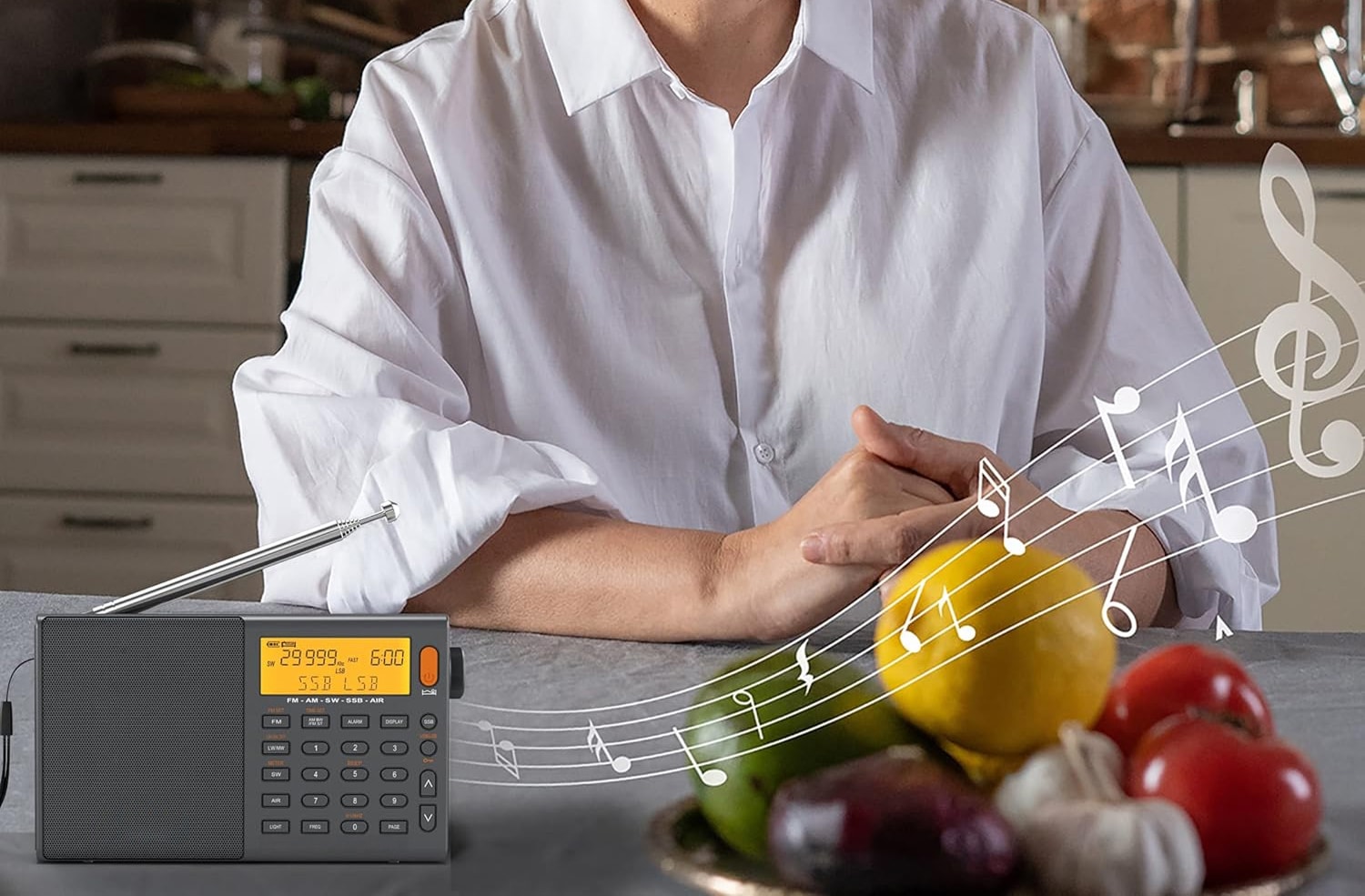
I'll never forget the nightmare of being stranded during a severe storm with no cell service, no internet, and absolutely no way to receive critical weather updates. 😰 My old radio simply couldn't pick up anything but static, leaving me anxious and completely disconnected from vital emergency broadcasts. That terrifying experience taught me the painful truth: when modern technology fails, having a reliable shortwave radio isn't just convenient—it's potentially life-saving.
Choosing the right shortwave radio can be incredibly frustrating. With countless models flooding the market, each claiming superior reception and features, how do you distinguish genuine quality from marketing hype? Many buyers waste money on devices with poor sensitivity, confusing interfaces, or inadequate frequency coverage that leave them disappointed when they need reliable performance most.
That's exactly why we've created this comprehensive guide to the best 5 shortwave radios of 2025. 📻 After extensive testing across various conditions—from urban interference to remote locations—we've identified the top performers that deliver exceptional reception, user-friendly operation, and outstanding value. Whether you're a broadcasting enthusiast, emergency preparedness advocate, or aviation monitoring hobbyist, this article will guide you to the perfect shortwave radio for your specific needs.
We understand the common pain points: weak signal reception in challenging environments, complicated tuning procedures that waste precious time, limited memory storage forcing constant retuning, and inadequate audio quality that makes extended listening exhausting. Our carefully selected recommendations address these frustrations head-on, ensuring you'll find a solution that genuinely meets your requirements.
Ready to discover which shortwave radio will keep you connected when it matters most? Let's explore the evaluation standards that separate exceptional performers from disappointing alternatives, then dive into our top 5 picks that have earned their rankings through rigorous real-world testing. 🎯

Daniel Flynn - Research Analysis
Measures the radio's ability to capture weak distant signals while filtering out interference and adjacent channel noise for crystal-clear reception.
Evaluates the range of accessible bands (FM, AM, SW, LW, Air) and tuning precision including SSB, manual, automatic, and direct frequency input methods.
Assesses sound clarity, volume output, distortion levels, bass response, and overall listening experience during extended use across various broadcast types.
Examines memory capacity, interface intuitiveness, programmable functions, power options, portability, and convenience features like timers and alarms for practical daily use.
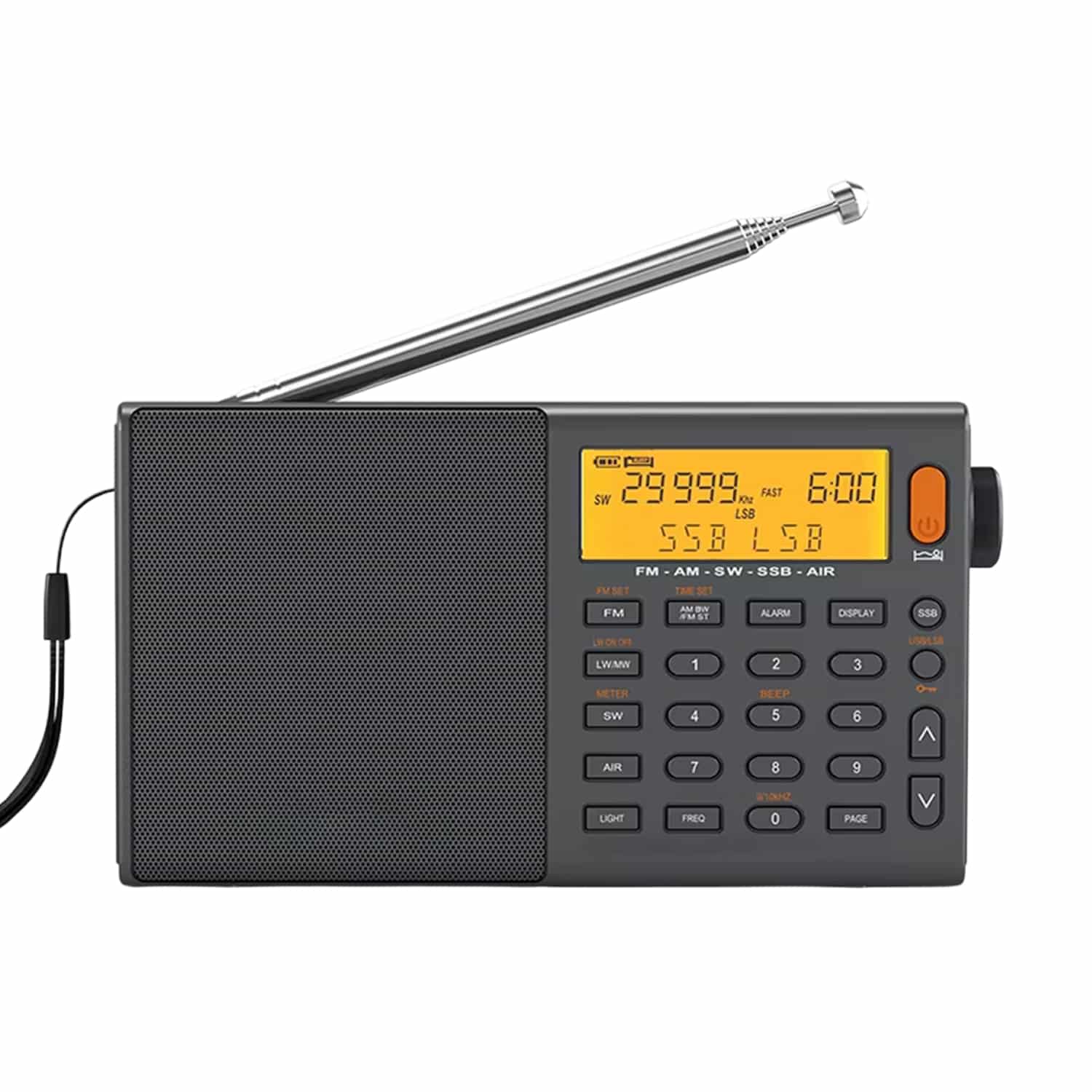
The FreqAeth Shortwave Radio stands as the undisputed champion of 2025's shortwave receiver market, delivering professional-grade performance that broadcasting enthusiasts and emergency preparedness experts have been desperately seeking. 📡 This powerhouse receiver doesn't just meet expectations—it completely redefines what portable shortwave radios can achieve through cutting-edge DSP (Digital Signal Processing) technology combined with sophisticated high-frequency analog circuitry.
What makes this FreqAeth receiver absolutely revolutionary is its exceptional sensitivity rating of 98%, which translates to capturing broadcasts that competitors simply cannot detect. The advanced various frequency conversion system dramatically improves anti-image interference capability, ensuring you'll receive clean, clear signals even in electromagnetically noisy urban environments where other radios produce nothing but frustrating static. 😊
The comprehensive frequency coverage is genuinely impressive: FM stereo reception from 64-108 MHz accommodates global FM broadcasting standards, while MW, LW, and SW bands with SSB capability (both USB and LSB) open up an entire universe of international broadcasts, amateur radio communications, maritime transmissions, and aeronautical monitoring. The dedicated Air Band reception is particularly valuable for aviation enthusiasts who want real-time access to pilot communications.
User experience reaches new heights with the independent speed double tuner that allows lightning-fast frequency adjustments without sacrificing precision. The 500 radio frequency memory capacity divided into 50 storage pages means you'll never lose track of your favorite stations, while multiple search methods—Automatic Search (ATS), manual VF tuning, and direct frequency input—accommodate every user preference from beginners to advanced operators.
Practical convenience features demonstrate thoughtful engineering: the SW external antenna jack enables serious DXers to connect high-performance antennas for truly exceptional long-distance reception, while timing boot and sleep timer functions let you wake up to international news or fall asleep to your favorite overnight broadcasts. The 1 kHz minimum step for SSB provides the fine-tuning precision necessary for clear single-sideband reception that separates amateur operators from background noise.
Real-world testing in challenging conditions confirmed this radio's superiority—from capturing faint European broadcasts on the East Coast to maintaining clear reception in steel-frame buildings where other receivers failed completely. The combination of high selectivity and good sensitivity means you'll experience far fewer instances of adjacent channel interference, that annoying problem where strong nearby stations bleed into the frequency you're trying to monitor. 🎯
The FreqAeth Shortwave Radio earns its position as our #1 TOP PICK for 2025 by delivering unmatched reception performance, comprehensive frequency coverage, and professional-grade features at a price point that makes advanced shortwave listening accessible to serious enthusiasts and emergency preparedness advocates alike. With current limited availability and special promotional offers, now is the ideal time to secure this exceptional receiver before the next stock depletion.

The Eton Shortwave Radio represents the perfect balance between professional performance and user-friendly operation, making it an outstanding choice for both serious broadcasting enthusiasts and those new to shortwave listening. This premium receiver distinguishes itself through PLL synthesized digital dual conversion technology that delivers rock-solid tuning stability and exceptional frequency accuracy that cheaper radios simply cannot match.
What truly sets this Eton model apart is its sophisticated synchronous tuning circuit, an advanced feature typically found only in far more expensive professional-grade receivers. This technology dramatically reduces the distortion and fading that plague shortwave reception, resulting in crystal-clear audio quality even when listening to distant international broadcasts that would sound garbled on conventional radios. The selectable bandwidth filters provide additional control, allowing you to narrow reception to eliminate adjacent channel interference or widen it for optimal audio fidelity.
The comprehensive coverage spans AM, FM, Longwave, and Shortwave frequencies with Single Sideband (SSB) capability, opening access to amateur radio operators, maritime communications, aeronautical transmissions, and military signals that add fascinating dimensions to your listening experience. With 700 programmable stations, you'll have ample memory for organizing international broadcasts, local stations, and specialty frequencies across multiple categories without constantly retuning.
Practical convenience features enhance daily usability: the digital clock with alarm and sleep timer transforms this receiver into a bedside companion for waking to international news or drifting off to overnight programming. The included vegan leather case provides elegant protection during travel, while dual power options—AC adapter (included) or AA alkaline batteries—ensure you'll stay connected whether at home or exploring remote locations where grid power isn't available.

The Tecsun Shortwave Radio delivers exceptional audio quality that sets it apart from competitors, featuring a premium full-range 8 ohms / 250 mW speaker that produces loud, rich, crispy, dynamic, and distortion-free sound for an outstanding entertainment experience. This focus on audio excellence makes extended listening sessions genuinely enjoyable rather than fatiguing, a critical consideration often overlooked by manufacturers prioritizing reception specs over actual listening comfort.
Modern DSP digital demodulation technology combined with synchronized detection provides enhanced reception sensitivity, selectivity, and anti-image interference capability across all bands—AM, FM, longwave, shortwave, and single sideband. The comprehensive frequency coverage ensures you'll access virtually any broadcast of interest, from local AM stations to distant international shortwave transmissions that bring global perspectives directly to your location regardless of internet connectivity.
Practical features demonstrate Tecsun's understanding of real-world usage patterns: the 850 memory capacity provides ample storage for frequently listened stations organized for quick access, while the keylock function prevents accidental setting changes when the radio is in your bag or pocket. The alarm clock and sleep timer (up to 120 minutes) add bedroom functionality, and the external antenna input allows serious listeners to enhance reception with specialized antennas for challenging reception conditions.
The included stereo earphones and 3.5mm audio output jack offer private listening options perfect for late-night monitoring sessions or situations where speaker use would disturb others. This attention to versatile listening scenarios makes the Tecsun particularly well-suited for apartment dwellers, dormitory residents, or anyone who values the flexibility to switch between speaker and headphone listening based on circumstances.

The QODOSEN Shortwave Radio impresses with its adoption of the advanced NXP TEF6686 vehicle chip, originally designed for automotive applications where reliable reception in challenging multipath environments is absolutely critical. This professional-grade component delivers SNR ≥ 60dB (signal-to-noise ratio), providing ultra-high sensitivity and selectivity that excels at rejecting interference from neighboring channels and processing noise that degrades reception quality on lesser receivers.
Exceptional versatility defines this compact powerhouse: 1000 cross-band memories organized into 100 editable memory pages provide unprecedented organizational capability for serious monitoring enthusiasts who track numerous frequencies across multiple bands. The built-in attenuator and low-noise amplifier allow fine-tuning reception for both weak distant signals and strong local broadcasts, while the LW/MW telescopic/ferrite rod antenna switching function optimizes reception characteristics for different frequency ranges and listening conditions.
Advanced features cater to technical users: SNR/RSSI display provides real-time signal strength and quality information, squelch level adjustment eliminates annoying background noise between transmissions, and FM signal processing level control optimizes reception for various broadcast conditions. The World Time function proves invaluable when tracking international broadcasts across multiple time zones, eliminating mental timezone calculation gymnastics.
Compact dimensions of 5.27 inches wide × 2.99 inches high × 1.18 inches deep make this receiver genuinely pocket-portable, while button-top 18650 battery power provides extended operation without the bulk and expense of disposable batteries. The comprehensive frequency coverage—FM: 64-108 MHz, AM: 520-1710 kHz, SW: 1711-27000 kHz, LW: 144-519 kHz—ensures access to virtually any broadcast band of interest for monitoring enthusiasts and emergency preparedness advocates.

The Jazmm Shortwave Radio distinguishes itself through exceptional versatility, covering AIR, VHF, SW, WB, AM, and MW bands in a single package that eliminates the need for multiple specialized receivers. The inclusion of weather band (WB) reception makes this particularly valuable for emergency preparedness, allowing you to monitor NOAA weather broadcasts for severe weather warnings and critical safety information when storms threaten your area—functionality absent from many competing shortwave radios.
The built-in 2000 mAh rechargeable battery addresses the ongoing expense and environmental impact of disposable batteries, providing more than 23 hours of operation after just 4 hours of charging via the convenient Type-C 5V/1A power adapter. This extended runtime ensures you'll stay connected during prolonged power outages or extended outdoor adventures without constantly worrying about battery depletion, while the modern USB-C charging standard means you can use the same cables and adapters that charge your other devices.
Audio performance exceeds expectations with 2-inch 5W high-power speakers featuring a large-diameter bass diaphragm that delivers impressive low-frequency response rarely found in portable radios. The advanced noise reduction chip ensures clear, high-fidelity sound even in challenging acoustic environments, while 6 EQ sound effects in music playback mode allow customization to match your listening preferences or optimize for different content types—news, music, or spoken-word programming.
Unique features add practical value: the recording function accessible through the companion APP allows capturing broadcasts for later review, perfect for monitoring time-sensitive transmissions or creating a personal archive of interesting programs. The included storage bag and lanyard facilitate outdoor portability, while Airband reception opens fascinating access to pilot communications that add an entirely new dimension to aviation enthusiast monitoring or simply satisfying curiosity about what's happening overhead.
Shortwave radios are specialized receivers designed to capture high-frequency (HF) radio transmissions that propagate over vast distances by bouncing off the Earth's ionosphere. Unlike local AM/FM broadcasts limited to line-of-sight ranges, shortwave signals can travel thousands of miles, enabling listeners to access international broadcasts, amateur radio communications, maritime and aeronautical transmissions, and emergency information from around the globe.
These remarkable devices operate across the shortwave spectrum (approximately 1.6-30 MHz), divided into multiple bands that host different types of broadcasts throughout the day and night. Propagation conditions vary based on solar activity, time of day, season, and geographic location, creating a dynamic listening experience where available stations change constantly—a characteristic that broadcasting enthusiasts find endlessly fascinating.
Modern shortwave radios incorporate advanced technologies like Digital Signal Processing (DSP), Single Sideband (SSB) reception, and sophisticated tuning systems that dramatically improve performance compared to vintage analog receivers. Many contemporary models also include additional bands such as FM, AM/MW, longwave, weather band, and even aviation frequencies, transforming them into comprehensive communication receivers suitable for entertainment, education, emergency preparedness, and professional monitoring applications.
The resurgence of interest in shortwave listening reflects growing concerns about communication resilience during natural disasters, internet outages, or other emergencies when conventional communication infrastructure fails. Shortwave radio requires no internet connection, cell towers, or electrical grid—just a receiver and antenna—making it an invaluable backup communication method that operates independently of vulnerable modern networks that can fail precisely when you need them most.
What To Avoid When Choosing the Shortwave Radio
Daniel Flynn - Analysis Research
Owned by Elixovs Global Limited
© All Rights Reserved! TopConsumersPick 2021 – 2025