
Few hobbies begin with such wonder yet dissolve into an anxious, painful ordeal faster than amateur astronomy. I had a truly annoying problem when using an old scope with my family: unboxing a complex contraption only to stare into a pitch-black eyepiece was a terrifying letdown for my excited kids. 🔭
Trying to locate faint celestial objects with flimsy plastic mounts turns what should be magic into a difficult nightmare. Finding a reliable beginner scope can feel overwhelming when technical jargon clouds every purchase choice.
We tested dozens of models to highlight the best 5 telescopes for beginners so you can bypass blurry views and unstable tripods. ✨ With our curated list, you will experience crystal-clear lunar craters and breathtaking planetary rings right out of the box.
Explore our carefully evaluated selections below to discover an astronomy setup that delivers crisp optics and effortless setup without any frustrating headaches. 🌌

Noah Bishop - Research Analysis
We evaluate light-gathering aperture and premium multi-coated optics to ensure bright, razor-sharp views of celestial objects.
We assess how quickly beginners can assemble, align finderscopes, and start observing without frustrating technical calibration delays.
We test structural rigidity and smooth fine-motion controls to eliminate vibrations during high-magnification planetary tracking sessions.
We inspect bundled phone adapters, quality eyepieces, and Barlow lenses that enhance observation and immediate astrophotography capability.

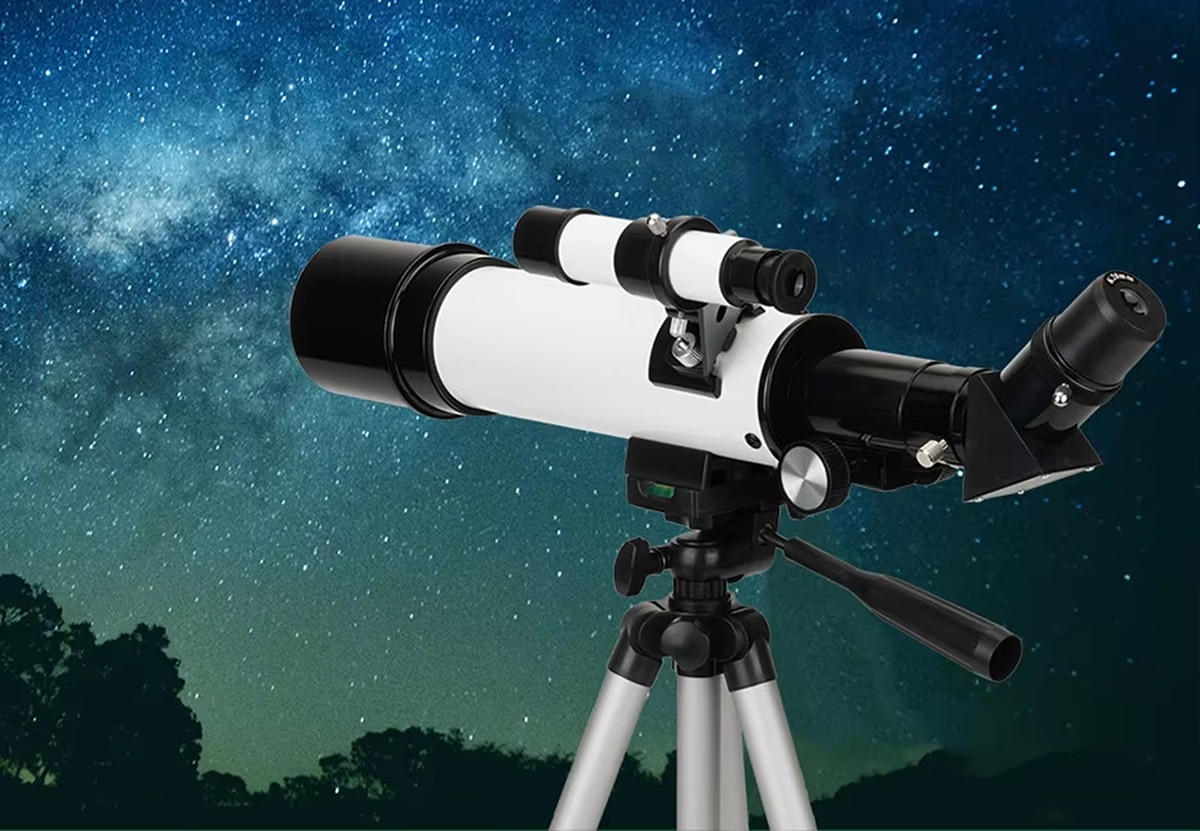
The AstreePix Telescope for Beginners establishes a stellar benchmark in entry-level astronomy by seamlessly pairing exceptional optical engineering with uncompromising simplicity. Featuring a precision-engineered 40mm objective lens and an astonishing 333X magnification capability, this telescope turns intimidating cosmic observations into an instantly gratifying experience for observers of all ages right from day one. 🔭
At the technological foundation of this beginner-friendly device lies an advanced optical assembly featuring a multilayer broadband coating system. This specialized coating maximizes light transmission while reducing chromatic aberration, ensuring first-time stargazers experience brilliant contrast. The integrated True Color technology delivers breathtaking, authentic hues when observing lunar surface topography, Saturnian rings, or nearby bright nebulae with spectacular edge-to-edge definition.
Modern beginners demand instant connectivity, and the AstreePix excels by including a dedicated universal smartphone adapter that transforms visual stargazing into an exciting astrophotography experience. Mounting your phone takes mere seconds, allowing you to capture pristine photographs of the lunar terminator and planetary disks to share instantly with friends and family without needing costly specialized camera rigs. 📱
Mechanical frustration is completely eliminated thanks to the intuitive tool-free assembly and comprehensive illustrated guidance designed specifically for novices. Even if you have never touched an astronomical instrument before, setting up the scope takes less than ten minutes. The smooth altazimuth controls allow fluid panning across the night sky, making manual target acquisition remarkably straightforward and enjoyable.
Ergonomics and durability are reinforced through the adjustable aluminum tripod, which smoothly accommodates both seated children and standing adults during long viewing sessions. Its resilient dual protection coating guards sensitive glass surfaces against atmospheric moisture and dust, ensuring that your investment provides years of dependable backyard celestial exploration across all seasons.
Furthermore, the ultra-compact footprint makes transport to dark-sky locations completely effortless for weekend camping trips. If you want a zero-friction gateway into astronomy, choosing the reliable AstreePix beginner astronomy telescope ensures rewarding discoveries every clear night under the stars. 🌌
The AstreePix Telescope for Beginners takes our top spot because it combines superior coated optics, swift smartphone integration, and effortless setup at unmatched value. Because it frequently sells out due to high seasonal demand and limited promotional offers, securing yours promptly ensures you never miss a spectacular clear-sky stargazing event.
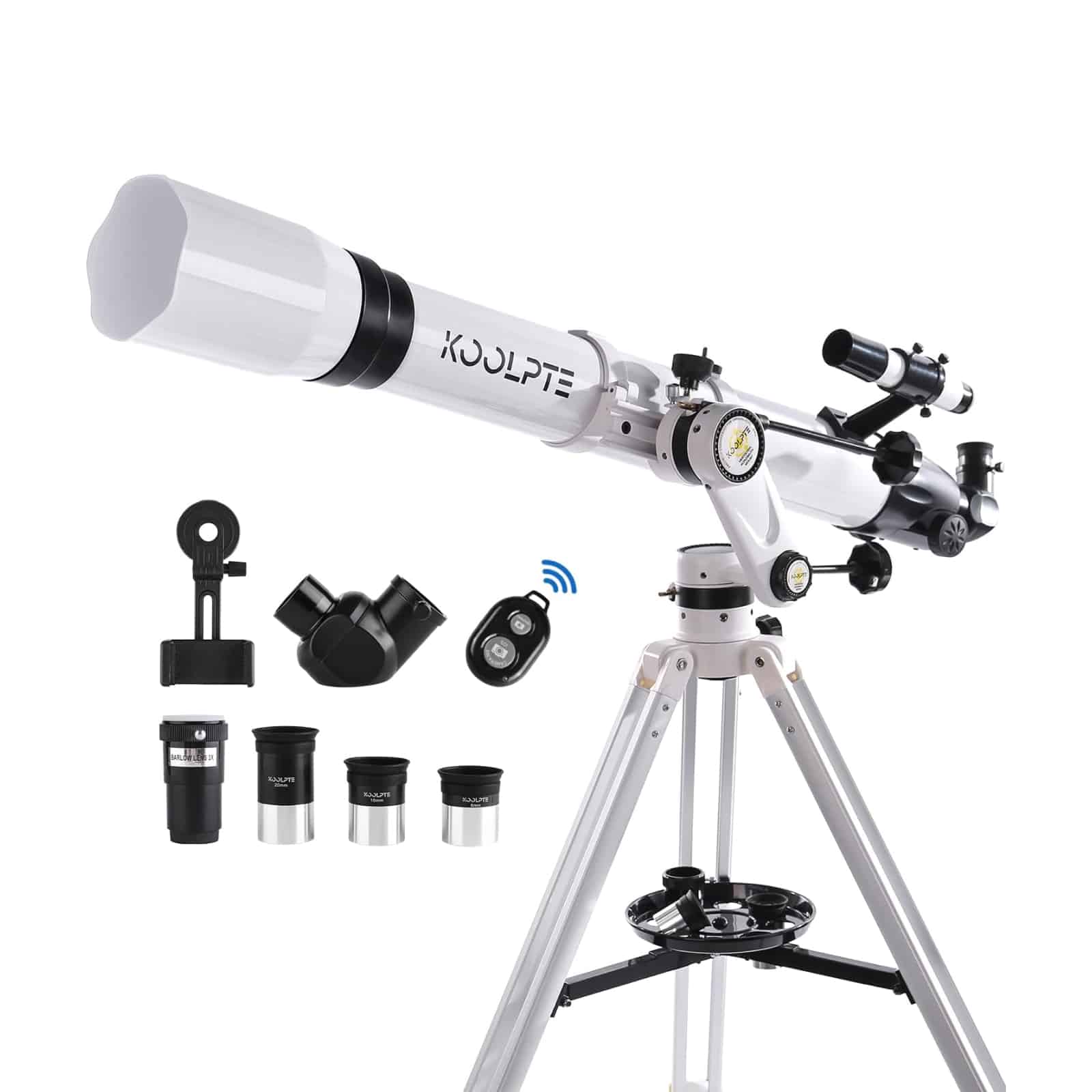
The Koolpte telescope is designed to deliver a powerful entry point for budding astronomers who want serious light-gathering capacity. Built around a massive 90mm refractor aperture and a long focal length, it pulls in significant light to reveal crisp details on deep-sky targets. Beginners can explore distant star clusters without struggling through dim, grainy optical representations.
Stability is paramount during high-magnification viewing, and this unit integrates a sub-black Vertisteel Altazimuth mount for smooth panning. The reinforced mount prevents annoying vibrations whenever you center celestial bodies in your field of view. Its fluid mechanical motion allows new stargazers to track passing targets accurately without sudden optical shifts.
Capturing photos of planetary phenomena is completely straightforward thanks to the included wireless remote shutter and digital phone adapter. You can easily snap photographs without physically touching the scope, preventing image blur during long exposures. This feature makes lunar imaging remarkably simple and fun for younger family members.
Portability remains a major benefit with this modular system, allowing rapid disassembly for weekend road trips. The durable optical tube withstands frequent transit while keeping optical elements firmly aligned. Stargazers of all experience levels will appreciate the balanced combination of powerful optical performance and beginner accessibility.
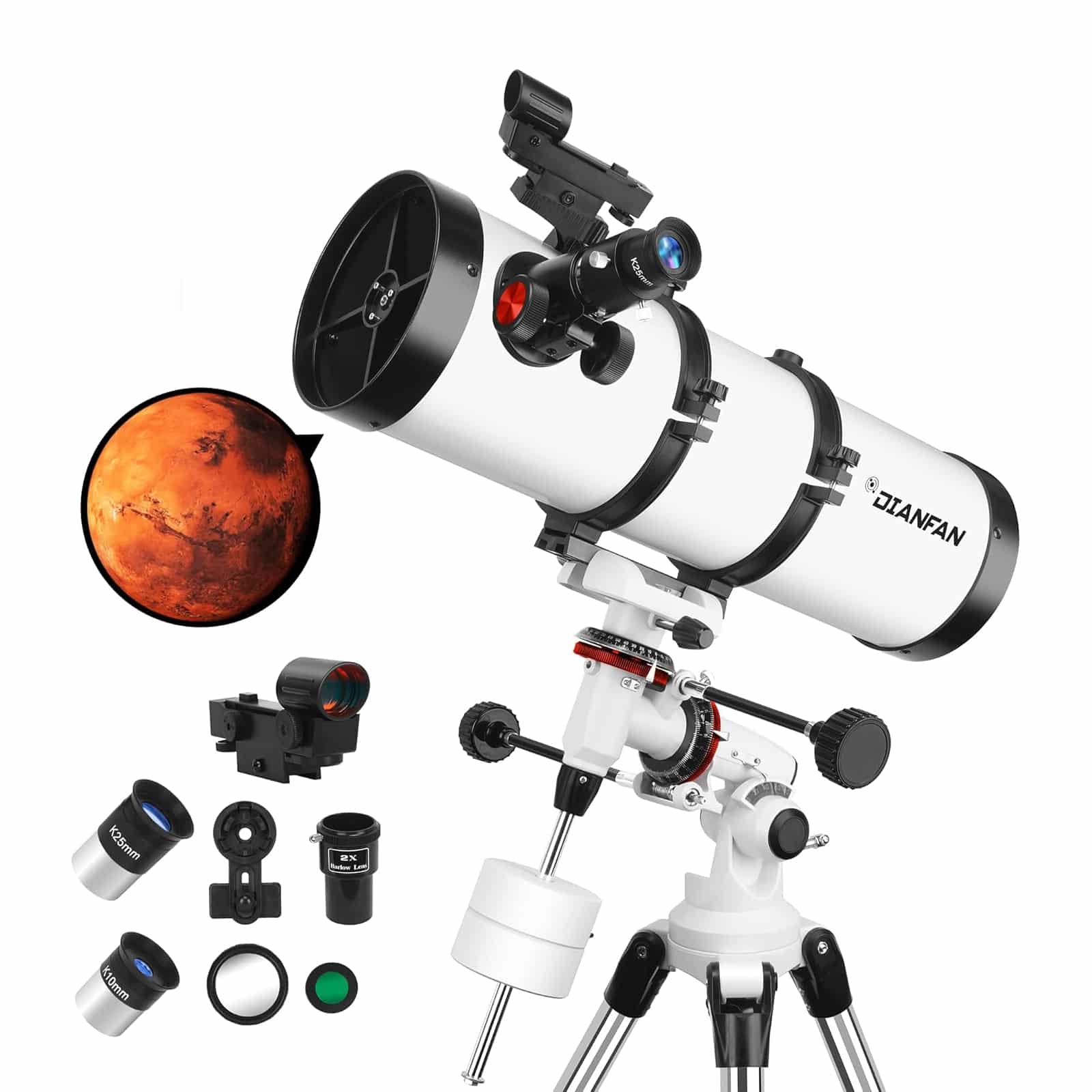
The Dianfan 150 EQ offers beginner astronomers a massive light collection surface thanks to its 150mm parabolic mirror design. This Newtonian reflector pulls in faint light from nebulae and distant galaxies that smaller scopes simply cannot resolve. It represents an exceptional optical foundation for users seeking serious astronomical depth.
To handle celestial motion, the telescope is paired with a pre-assembled German equatorial mount featuring manual slow-motion tracking cables. This mount configuration allows users to compensate for Earth's rotation by adjusting a single axis once aligned. It provides novices with hands-on learning in traditional celestial navigation.
The package comes exceptionally well-equipped with multiple eyepieces, a 2X Barlow lens, and an included contrast-enhancing moon filter. The filter reduces intense glare when viewing bright lunar phases, safeguarding your eyes during prolonged viewing. Its broad magnification range adapts swiftly to planetary surfaces or wide star fields.
Supported by a rigid stainless steel tripod, the system minimizes ground vibrations even when extended to maximum viewing height. Novices will enjoy the reliable build quality and the responsive red dot finderscope for rapid target centering. It is a solid instrument for anyone eager to master reflective astronomy basics.
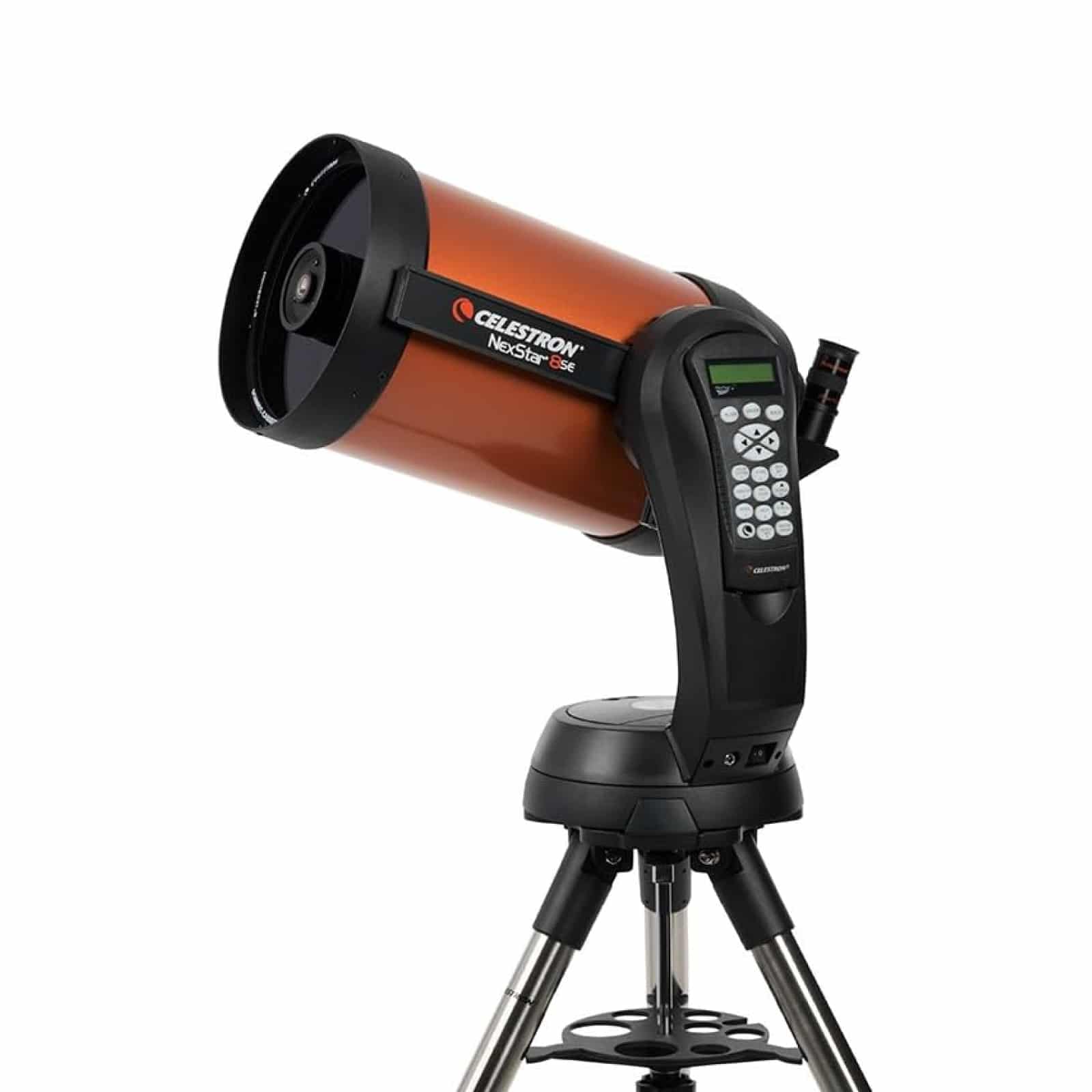
The Celestron NexStar 8SE brings legendary optical excellence to ambitious beginners who want computerized tracking. Featuring an expansive 8-inch Schmidt-Cassegrain system, this telescope gathers immense light while maintaining a relatively compact tube length. It reveals stunning cloud bands on Jupiter and intricate structures in distant galaxies with remarkable clarity.
Navigating the night sky is fully automated via the computerized GoTo mount and its extensive internal celestial database. Users can automatically slew to over 40,000 deep-sky objects with the touch of a button on the handheld controller. This eliminates the frustration of manually searching star charts in the dark.
Alignment is made accessible through Celestron's proprietary SkyAlign calibration technology, which requires centering any three bright celestial objects. You do not even need to know the names of the stars to complete alignment. The computerized system calculates geographical positioning and begins tracking within minutes.
Built to expand alongside your growing astronomy skills, this telescope offers extensive compatibility with advanced imaging accessories and wireless modules. Backed by a comprehensive two-year factory warranty and dedicated technical support, it represents a premium, high-tech investment for serious beginners.
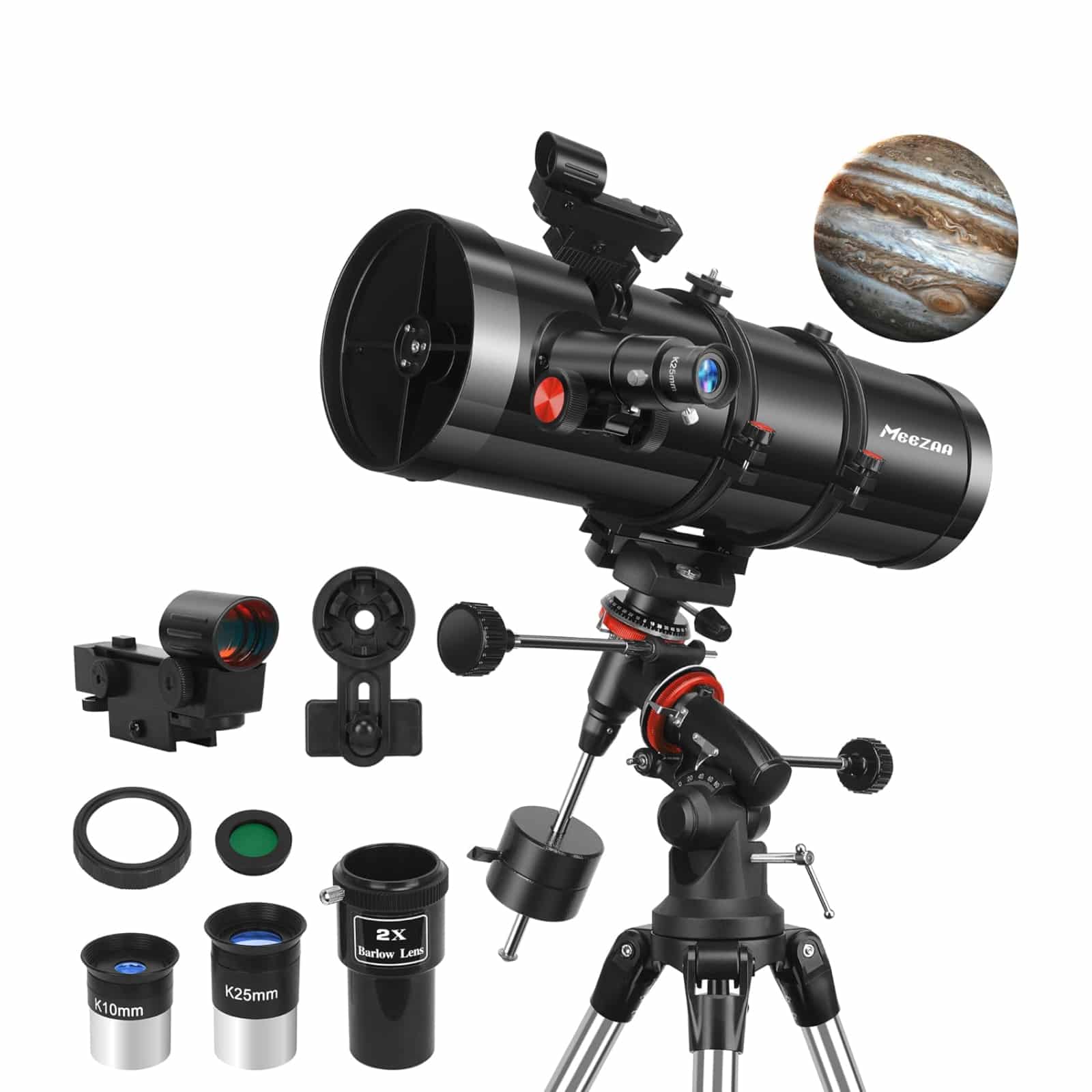
The MEEZAA reflector telescope is tailored for adults and aspiring astronomers who desire a large light-gathering aperture on a practical budget. Boasting a 150mm primary mirror combined with a 650mm focal length, it renders bright, detailed views of the lunar surface and deep-sky nebulae. Its wide optical opening makes celestial observation exciting from the very first evening.
Precision tracking is facilitated by an upgraded equatorial mount equipped with manual slow-motion flex cables. Once aligned with Polaris, observers can smoothly follow drifting planets across the celestial sphere without jerky adjustments. The graduated setting circles help introduce beginners to the fundamentals of celestial coordinates.
The package features high-quality eyepieces and an optical 2X Barlow lens that dramatically expands magnification versatility up to 130X. A specialized lunar filter is bundled to protect eyes and enhance high-contrast crater details during full moon phases. The included phone mount allows quick digital snapshots through the eyepiece.
A rugged stainless steel tripod anchors the entire optical assembly, drastically reducing wobble on uneven ground surfaces. With around-the-clock technical support available, beginners can resolve assembly or focusing questions promptly. It remains a capable Newtonian reflector setup for learning astronomical fundamentals.
A telescope for beginners is an optical instrument specifically engineered to make observing celestial objects simple, enjoyable, and accessible for newcomers. Unlike complex research tools, beginner scopes emphasize intuitive controls, quick assembly, and durable construction.
These instruments utilize either refractive glass lenses or reflective mirror assemblies to collect and focus faint light from distant cosmic bodies.
Modern starter telescopes frequently incorporate smartphone adapters and user-friendly altazimuth or equatorial mounts to streamline target acquisition and amateur astrophotography.
Ultimately, a quality beginner telescope bridges the gap between raw curiosity and celestial discovery, allowing anyone to explore the moon, planets, and deep-sky objects from their backyard.
What To Avoid When Choosing the Telescope for Beginners
Noah Bishop - Analysis Research
Owned by Elixovs Global Limited
© All Rights Reserved! TopConsumersPick 2021 – 2025